
Home/ Dust Collection/ Reverse Air Cleaning System
Dust CollectionReverse Air
Dust Collector
Low-pressure reverse flow baghouse technology that gently cleans filter bags without high-pressure bursts — protecting delicate media, extending bag life, and reducing maintenance frequency.
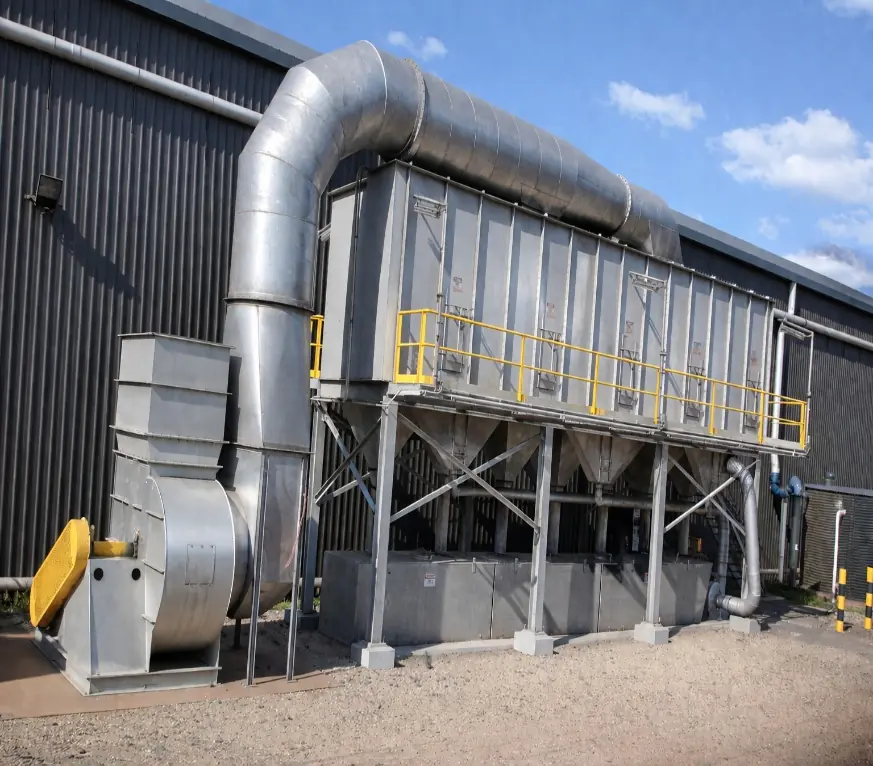
What is it
Reverse Air Baghouse — Gentle, Low-Pressure Dust Control
GPC Reverse Air dust collectors (often called a reverse flow or reverse air baghouse) is another type of industrial air pollution control device used to remove dust from gas streams using fabric filter bags and cleaned by reversing the airflow. It sends a low-pressure airflow in the opposite direction to normal filtration.
Dust-laden air enters the collector, and as air flows from outside to inside of the fabric bags, dust particles collect on the outer surface of the bags, forming a dust cake. Clean air exits through the inside of the bags.
Cleaning takes place by isolating a compartment (section) from the main airflow. A fan or reverse air system gently blows clean air in the opposite direction (inside → outside). This reverses the airflow through the bags. The bags collapse slightly, loosening the dust cake. Dust falls into the hopper below for removal. Unlike pulse jet systems, this is a low-pressure, gentle cleaning process.
Why Choose GPC Reverse Air?
- Gentle cleaning: Unlike pulse jet systems, it does not use high-pressure bursts. This reduces fabric wear, bag damage, and delivers longer bag life.
- Longer bag life: Bags last longer due to less mechanical stress and fatigue.
- Lower maintenance frequency: Resulting in fewer replacements and repairs.
- Suitable for certain dust types like:
- Fibrous dust
- Light, fluffy dust
- Dust that forms a stable cake
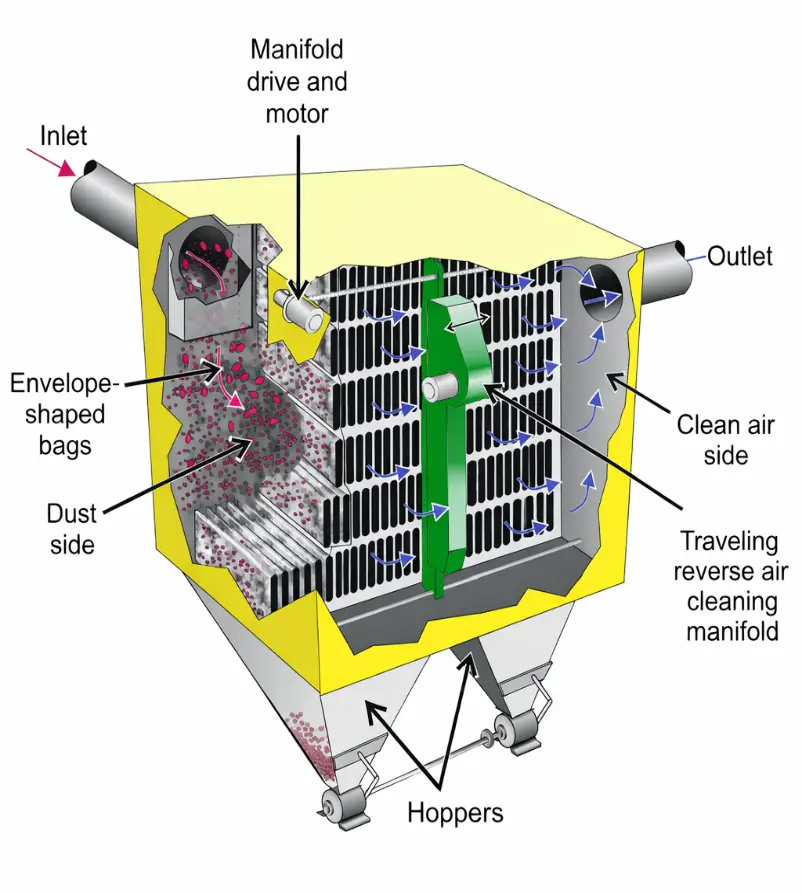
Technical illustrations
How Reverse Air Cleaning Works
Reference diagrams from GPC client documentation.
Model selection
Reverse-Air Blow Dust Collector Selection Guide
Industrial models and specifications — airflow capacity, filter area and reverse-air blowing across the GPC range.
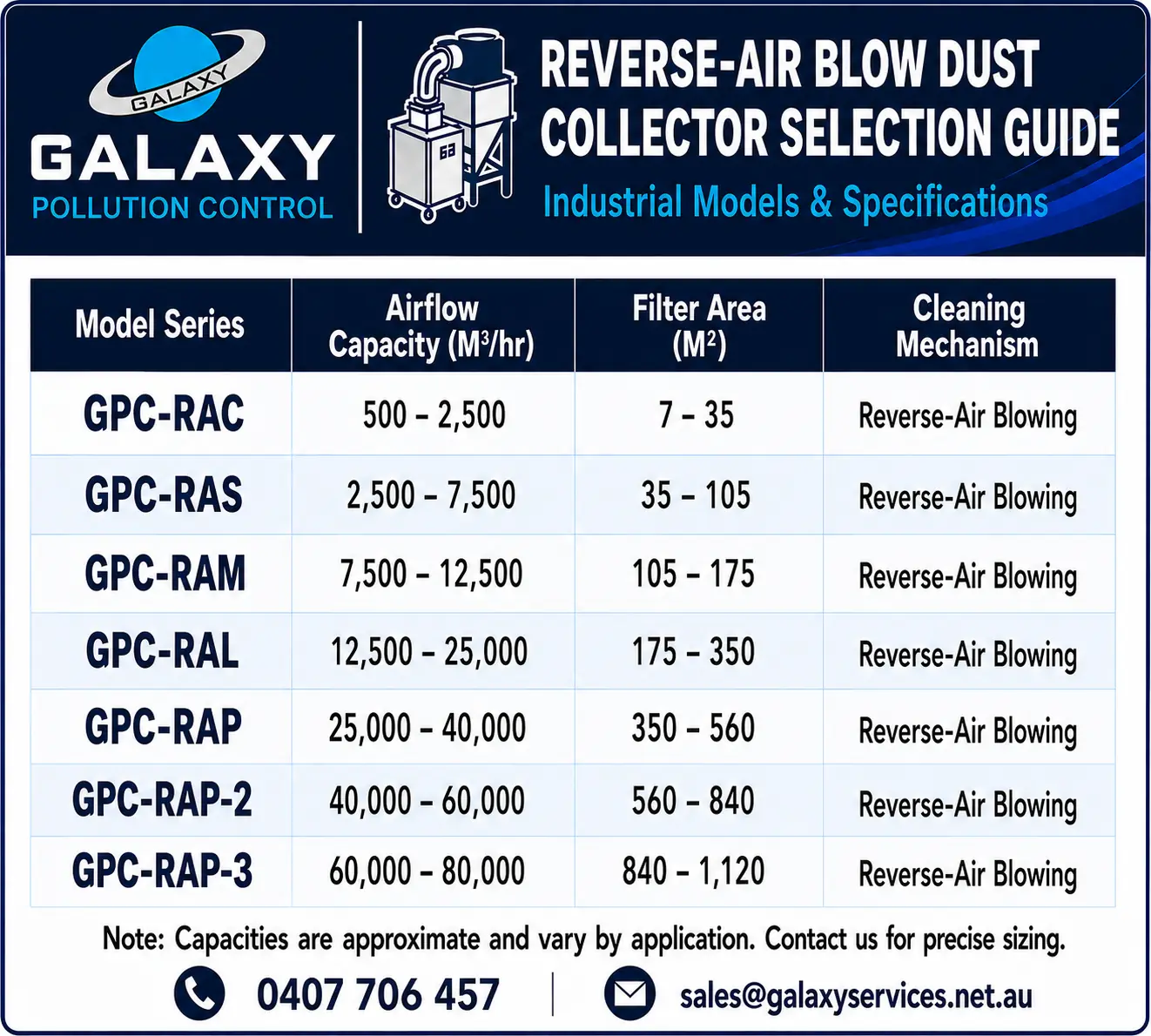
Capacities are approximate and vary by application. Contact us for precise sizing — 1300 131 944 or request a quote.
Operating Principle
How the Reverse Air Cleaning Cycle Works
A gentle reverse flow of clean air collapses and flexes the filter bags — dislodging accumulated dust without the stress of high-pressure pulse bursts.
Applications
Industries Served
Reverse Air Systems are the preferred choice for operations handling fibrous, light or fluffy dust types where gentle cleaning protects the filter media.
- Woven fabric filter bags
- Filter bag support cages & retainers
- Reverse air fans & ductwork
- Compartment isolation damper valves
- Pressure differential controllers
- Sequence control panels & timers
- Hopper & dust discharge systems
- Gentle cleaning — significantly reduces fabric wear and bag damage
- Extended bag life — 2–3× longer than pulse jet systems
- Lower maintenance frequency and fewer replacements
- Ideal for fibrous, light and fluffy dust types
- Handles dust that forms stable, adherent cakes effectively
- Lower operating noise — no high-pressure pulse firing
- EPA & Australian compliance ready
Maintenance & Support
Preventative maintenance keeps your reverse air system performing efficiently and extends the life of your filter media.
We don't just supply components.
We engineer systems that perform.
We assess your dust characteristics, airflow requirements and fabric media compatibility so your Reverse Air system is correctly sized, properly sequenced and fully compliant. Not every dust suits pulse jet — we'll recommend the right technology for your application.